
Marine Electrical Safety 101: Fuses, Wire Gauge & Waterproof Connections
Not sure your trolling motor is wired safely? We cover fuse placement, wire gauge vs run length, waterproof connections, and the BMS layer — plus a pre-launch safety checklist.

Not sure your trolling motor is wired safely? We cover fuse placement, wire gauge vs run length, waterproof connections, and the BMS layer — plus a pre-launch safety checklist.
A dead battery is an inconvenience. A loose connection on a 12V/50A circuit is a fire. On a boat — with fuel vapors, vibration, and saltwater — "good enough" wiring isn't good enough. Here are the four layers that keep your trolling motor setup safe, plus the exact parts we recommend.
Your trolling motor can pull 30–50 amps at full throttle. That's enough current to melt undersized wire in seconds and arc at any loose terminal. Three things make a boat worse than your garage:
The fix isn't expensive. It's four habits: fuse it, size the wire, seal the connection, and let the BMS do its job.
A fuse is the only thing between a short circuit and a melted harness. Three rules:
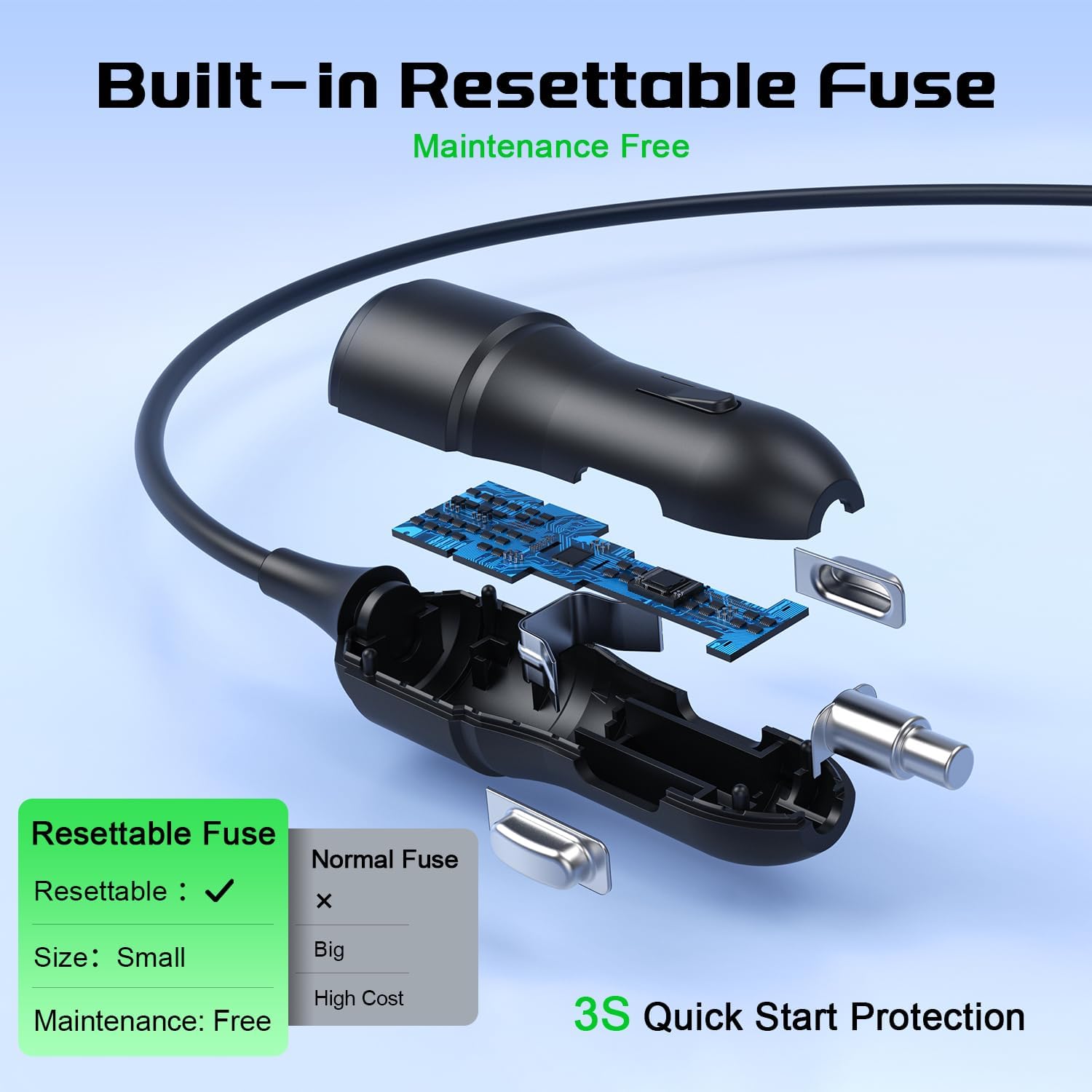
From $16.99 was $18.99
4.9FT 12AWG cable with an inline auto-reset fuse and M10 O-ring terminals — a clean, fused link for 12V accessories and tender charging.
Undersized wire is the #1 cause of "my motor feels weak at the end of the day." Use marine-grade tinned copper only (the tin coating resists corrosion), and size for the run, not just the motor:
| Current draw | Up to 10 ft (3 m) | 10–20 ft (3–6 m) |
|---|---|---|
| ≤ 30A | 10 AWG | 8 AWG |
| 30–50A | 8 AWG | 6 AWG |
| 50–80A (24V/36V) | 6 AWG | 4 AWG |
Our 50A plug & receptacle is built around 8 AWG marine copper — right for the typical bow-mount run. Longer cable runs need to step up a gauge to avoid voltage drop that robs you of thrust.
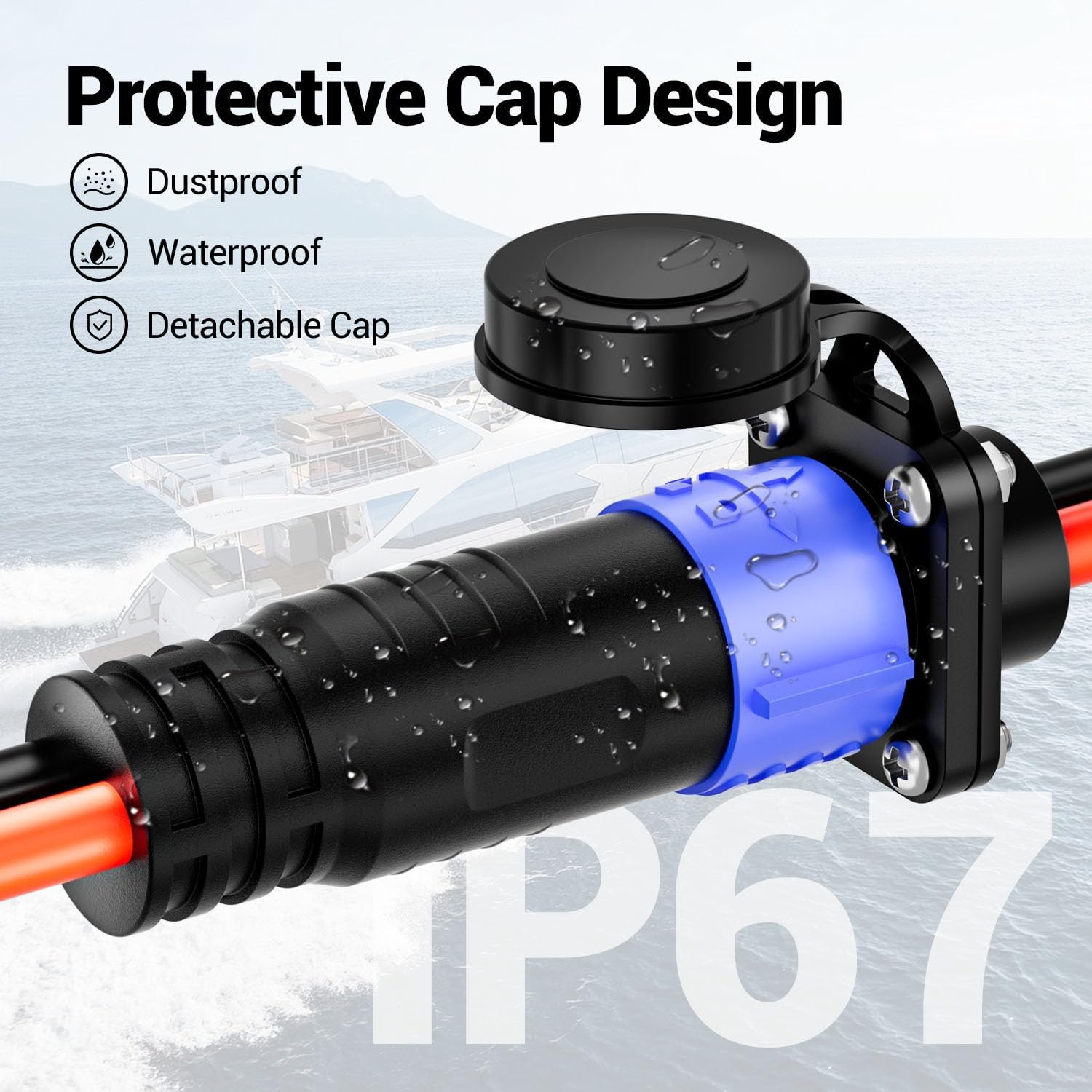
Salt spray finds every gap. Three cheap habits prevent 90% of corrosion failures:
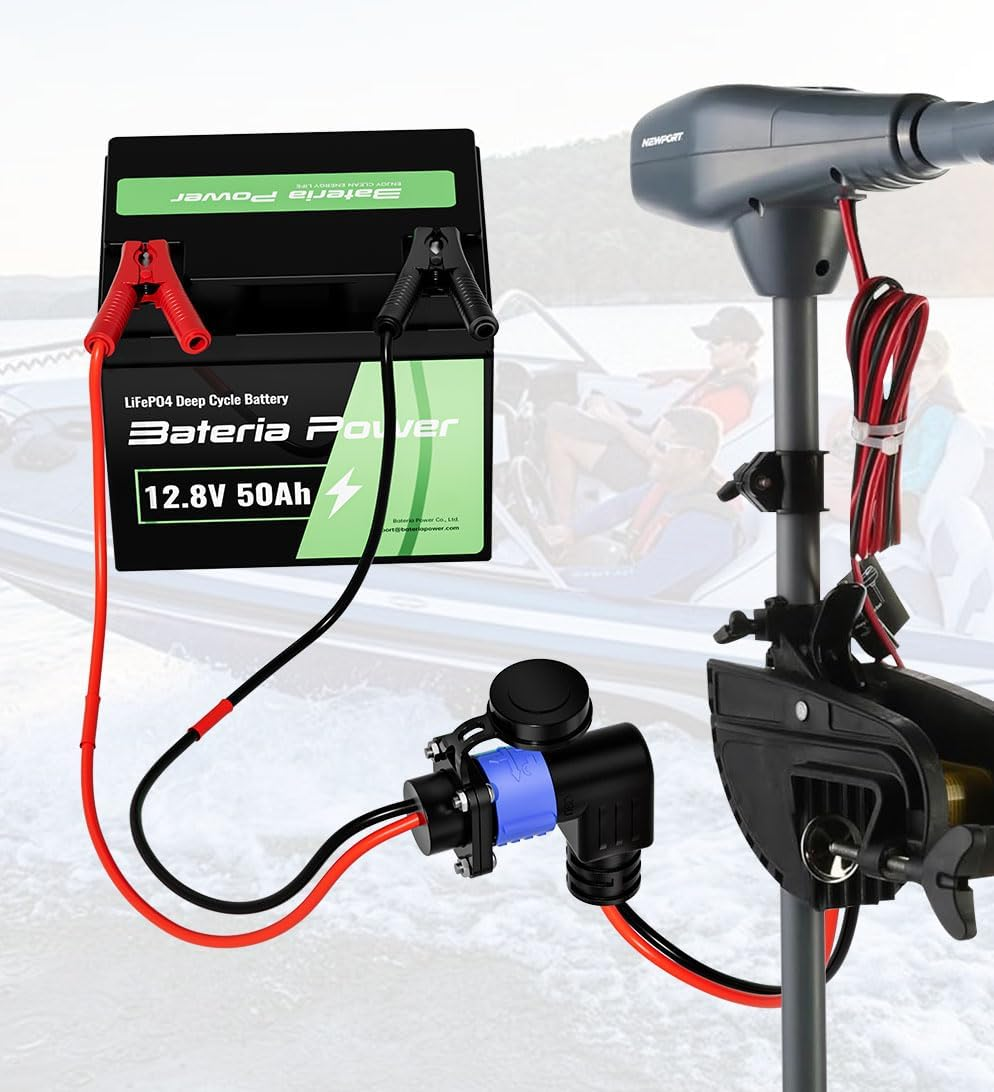
Modern LiFePO4 does part of the safety job for you. Every BateriaPower lithium cell has a BMS (Battery Management System) that cuts off on over-charge, over-discharge, short circuit, and over-temperature. Pair it with an MPPT solar charge controller and the solar side is protected from over-charge too. You still fuse the main run — the BMS is the backstop, not the first line.
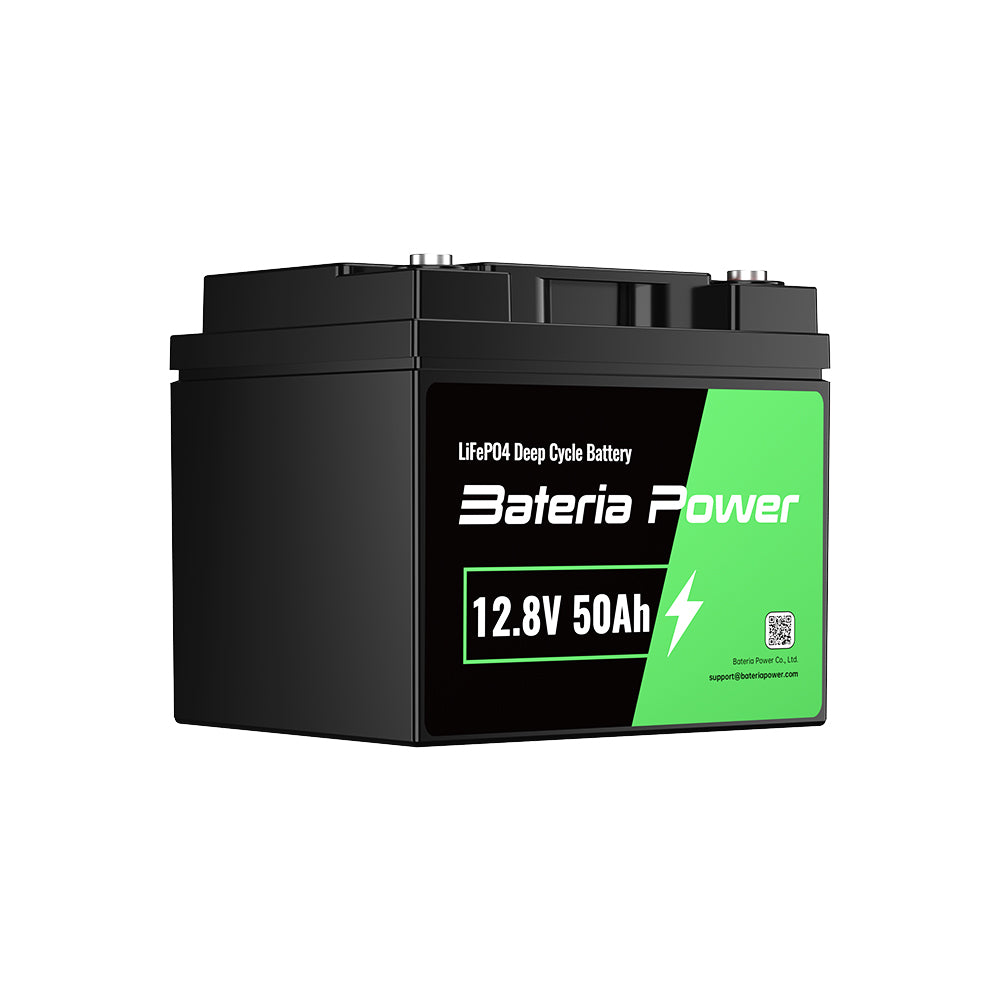
Built-in BMS · drop-in replacement for lead-acid.

| ✓ | Before every launch |
|---|---|
| ☐ | Fuse/breaker present within 7" of battery positive |
| ☐ | Wire gauge matches run length (8 AWG min for 50A) |
| ☐ | Plug & receptacle seated and locked (IP67 cap on) |
| ☐ | Terminals tight, no green corrosion, dielectric grease applied |
| ☐ | Battery BMS healthy (Bluetooth app shows normal) |
Can I use an automotive blade fuse instead of a marine breaker?
You can for a small accessory, but a marine-rated auto-reset breaker is safer for a 30–50A motor — it won't leave you with a blown fuse and no power mid-trip.
What size fuse for a 24V / 36V system?
Still size to 125–150% of max draw. A 36V 112-lb motor may draw 50–60A, so a 60–70A breaker on the main run.
Is IP67 enough on the water?
For spray and rain, yes. It is not a submersion rating — don't mount the receptacle where it sits underwater.
Do I need a battery master switch?
Recommended on any boat with a permanent install — it lets you cut all power for storage and servicing.
Wire it once. Wire it safe.
Grab the IP67 50A plug & receptacle and a fused charging cable, and stop worrying about loose connections at the bow.
Prices and variant availability reflect the store at publish time and fluctuate by configuration — verify in your Shopify admin before going live. Internal links to our other guides (Trolling Motor 101, Elbow vs Straight, LiFePO4 vs Lead-Acid, Battery Sizing, Solar Charging) use placeholder handles; update them to the live URLs after those posts publish.
Your cart is currently empty.
Start Shopping