You're three hours into a perfect day on the lake and the battery gauge is sliding toward empty — and the nearest outlet is a parking lot away. A solar panel changes that math. Here's how to trickle-top a trolling motor battery on the water, what it realistically gives you, and the one mistake that fries the pack.
Yes — you can solar-charge a trolling motor battery
A trolling motor battery is just a deep-cycle battery, and any deep-cycle battery can be fed from a solar panel through a charge controller. It works best with LiFePO4 (high charge efficiency, takes a fast partial top-up happily) but it works with AGM too — just slower and less efficiently. The key is the charge controller, not the panel.
How it works (in one line)
Panel → MPPT controller → battery. The MPPT controller is the brains: it converts the panel's variable voltage into exactly what the battery wants, squeezing 20–30% more amps out of the same panel than a cheap PWM controller. Skip it and you waste most of your panel.
The realistic math: what does a panel actually give you?
A 100W panel in good sun delivers roughly 5–6 A into a 12V battery. Across a full 6–7 hour sunny day that's about 30–40 Ah replenished — enough to replace a big chunk of a day's draw.
| Setup |
Rough daily top-up |
Best for |
| 100W panel + 20A MPPT |
~30–40 Ah/day |
12V 50Ah kayak / Jon boat |
| 200W panel + 30A/40A MPPT |
~60–80 Ah/day |
12V 100Ah / 24V banks |
Figures assume clear sun and a reasonably aimed panel; real-world yield drops on cloudy days and with shading. Treat solar as a range extender, not a replacement for shore charging.
Why it matters for trolling motors
Your motor might pull 40–50 A at full throttle — far more than any portable panel makes. So solar won't let you run forever. But it buys you the quiet hours: top up between spots, recover while you're anchored fishing, and stretch a 50Ah pack into a full day instead of a half-day. Pair it with a properly sized LiFePO4 and you stop watching the gauge.
What you need (and what we sell)
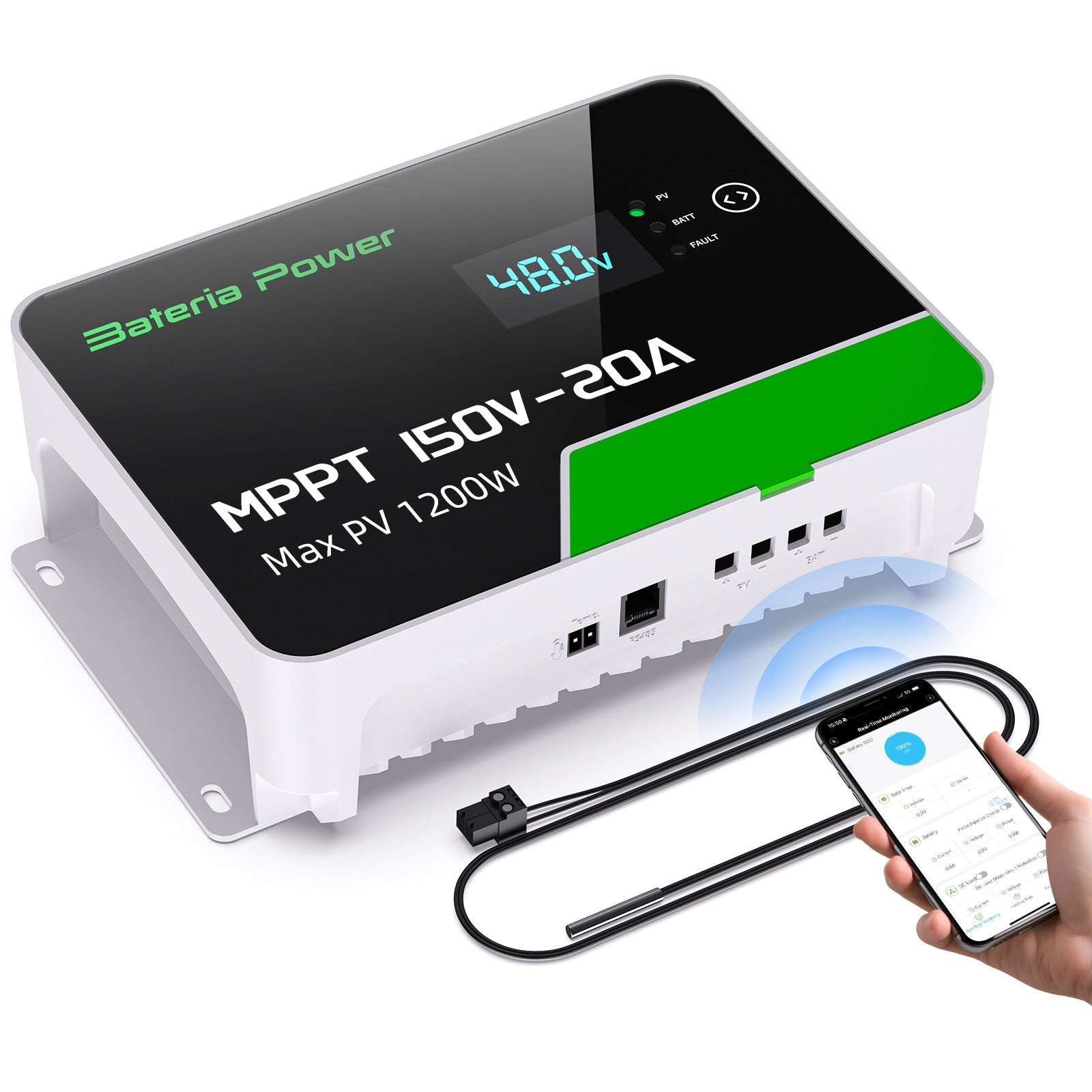
MPPT Solar Charge Controller (20A / 30A / 40A, Wireless)
From $130.99 Save 18%
Lithium-profile MPPT with app monitoring. Sets the right absorption/float for LiFePO4 — no equalize, no overcharge. The brains of the whole setup.
View MPPT controllers →
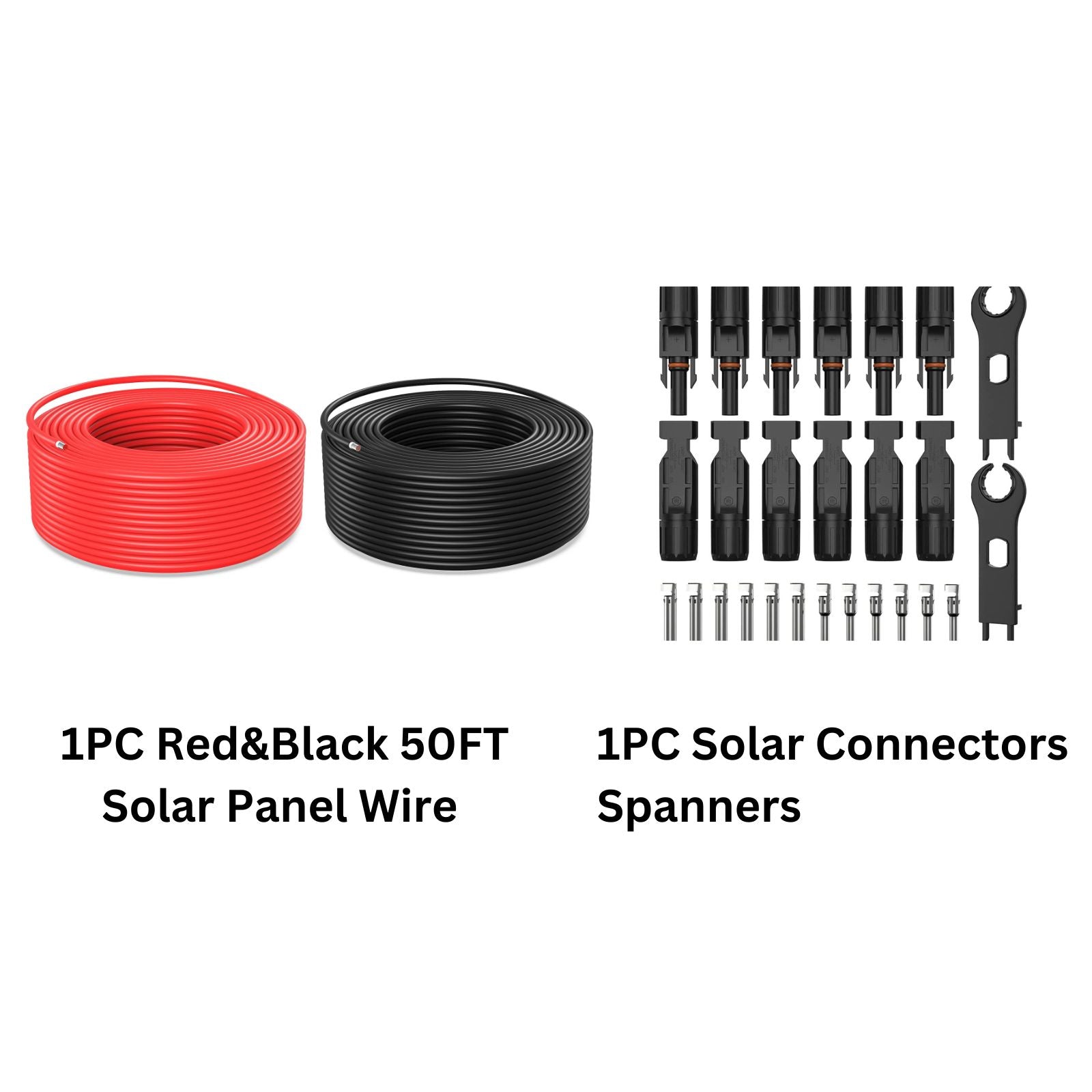
Solar Panel Wire Kit (10AWG, Tinned Copper)
From $85.99
Marine-grade tinned copper that shrugs off corrosion. Right gauge for panel-to-controller runs so you don't lose watts to resistance.
View solar wire →
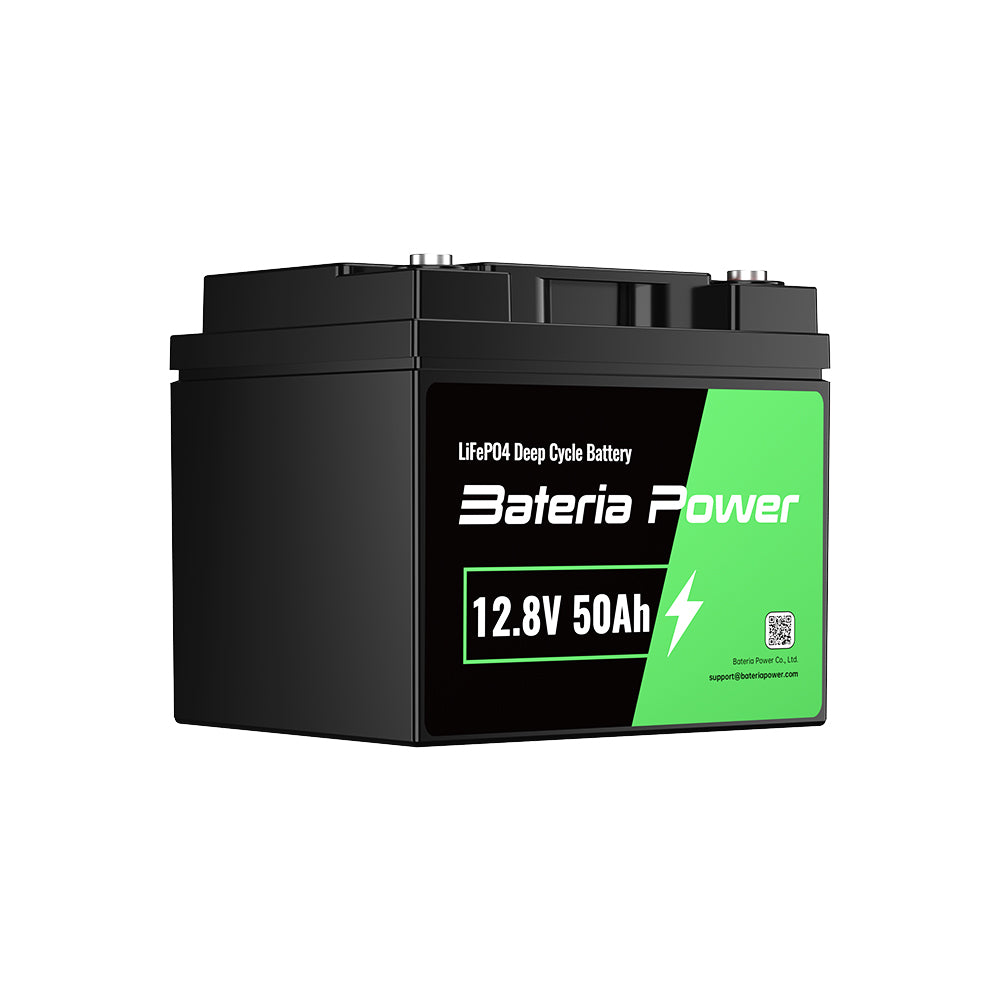
12V 50Ah / 100Ah LiFePO4 Battery
From $75.00 Save up to 62%
The battery being charged. High efficiency and a built-in BMS mean it soaks up solar happily and safely all day.
View batteries →
Wiring & safety checklist
-
Never connect a panel straight to the battery — always through an MPPT/PWM controller, or you'll overvoltage the pack.
- Set the controller to a LiFePO4 / lithium profile (no equalize stage). Our MPPT does this out of the box.
- Use marine tinned-copper wire at the right gauge (10AWG for most portable panels) — our kit.
- Fit a fuse between controller and battery; mount the controller where it stays dry and cool.
- Aim the panel at the sun and keep it unshaded — one shadowed cell craters output.
Honest limits
- It's a trickle, not a fast charge. A 100W panel makes ~6 A; your motor can draw 8× that. Solar extends the day; it doesn't replace shore power.
- Cloudy and tree-lined days give little. Size for clear-sky trips, not monsoons.
- Bigger bank = bigger panel. A 24V 100Ah bank needs 200W+ to matter.
FAQ
Will it charge while the motor is running?
Yes — if the panel feeds the battery through the controller, the battery charges whenever there's sun, running motor or not.
How big a panel do I need?
100W covers a small 12V 50Ah rig as a day-extender; 200W+ for 100Ah or 24V banks. More watts = more recovered Ah.
Can I use my existing lead-acid battery?
Yes, but it charges slower and you can only use ~50% of it — so solar helps less. LiFePO4 is the better solar partner (see our LiFePO4 vs Lead-Acid guide).
Do I need a special charger too?
Keep a shore lithium charger for full recharges at home; solar is for topping up on the water.
BateriaPower Marine · Deep-cycle lithium and off-grid solar for boats, RVs, and off-grid. Watt/Ah figures are clear-sun estimates; real yield varies with weather and panel aim. Prices and promotions reflect the store listing at time of writing.

